Why India's stuck PhD scholars are quietly moving off editing services for mentors who decode their guide's feedback

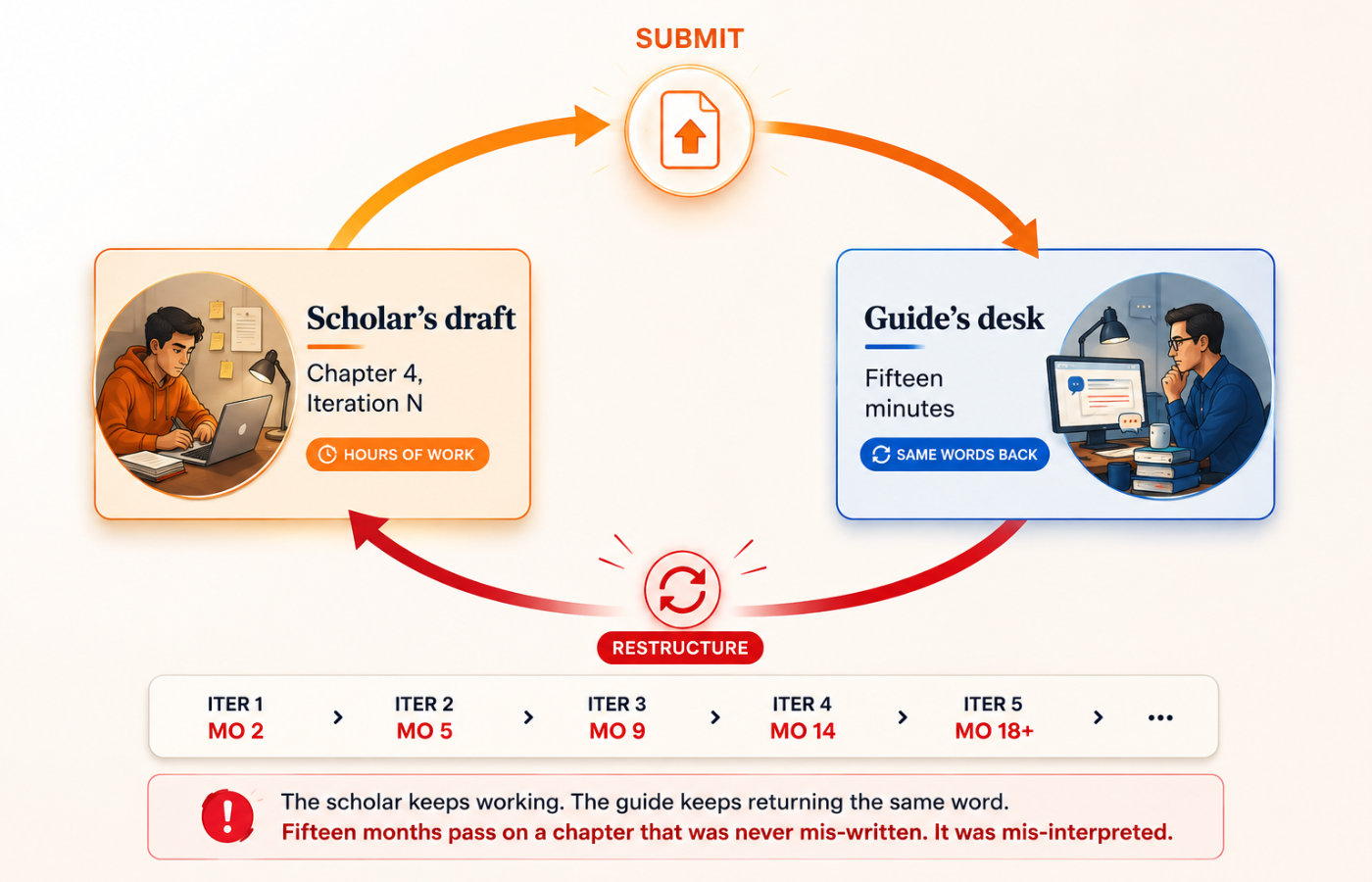
It is 9:14 on a Monday and Chapter 4 has been closed for eight months. The last time she opened it, her guide had written one word across the top: restructure. Not what. Not why. Just the word.
She has rewritten the chapter twice. Both times, the same word came back.
In between, she paid an editing service ₹24,700. They returned cleaner prose. They did not answer the one question she needed answered. What did the guide actually mean?
She is now on Iteration 4 of Chapter 4. Sixteen months have passed since she first wrote it.
She is not alone. Almost every stuck PhD scholar in India is in some version of the same trap.
Write chapter. Send to guide.
One-word comment comes back.
Guess what it means. Rewrite.
Send again. Same word.
Months disappear on a fix that was never the fix.
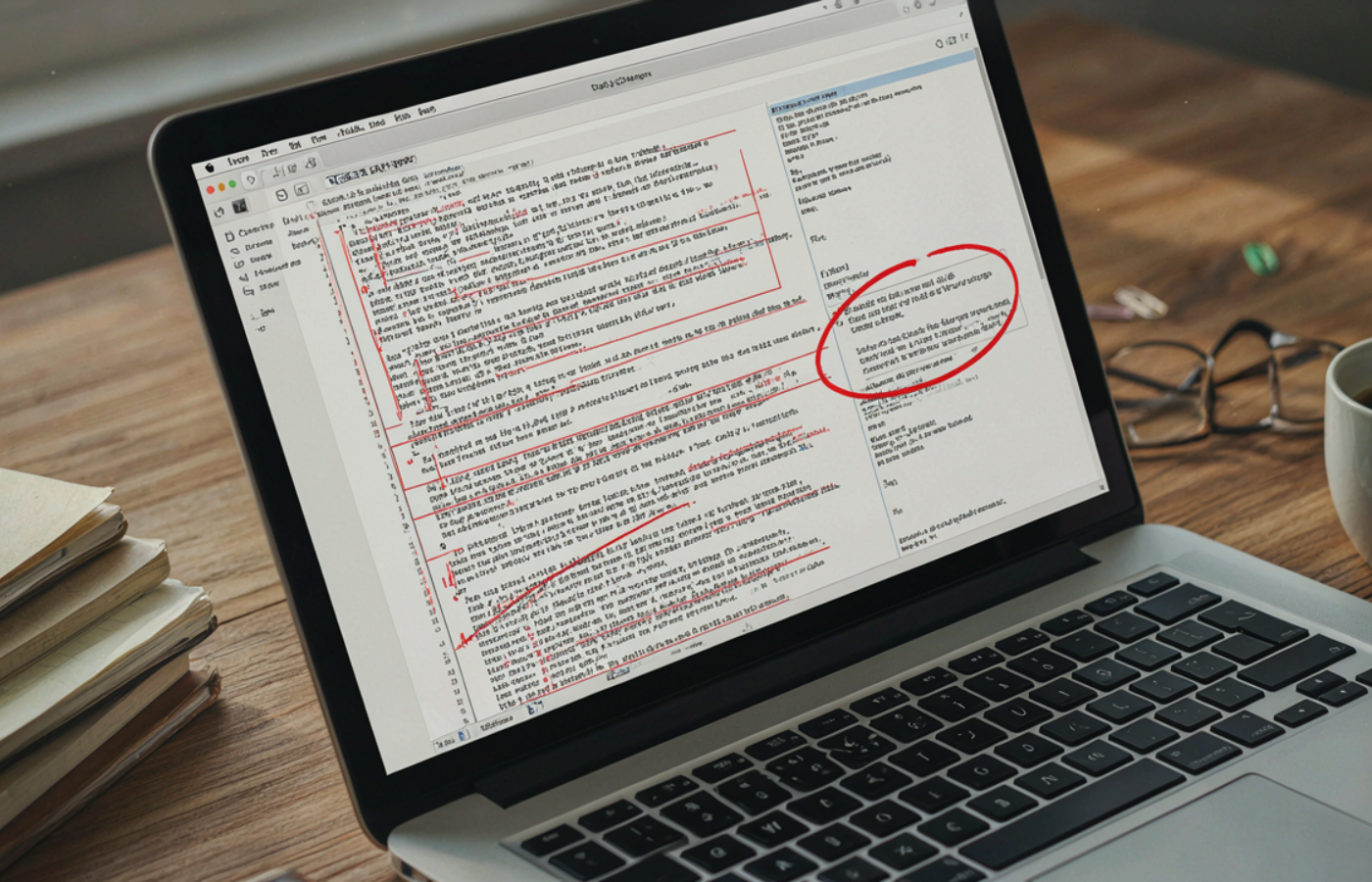
The loop between "restructure" and rejection
Ask any guide in India why the comments are so short and they will give the honest answer.
They are supervising 12 to 15 scholars. They have their own papers, teaching load, admin. A three-page markup on every chapter is not possible. A one-word cue is what they can give.
That one-word cue is not the problem. The problem is that no one translates it.
The scholar reads "restructure" and hears one thing. The guide meant another. The chapter comes back not because the scholar did not work hard. It comes back because the scholar worked hard on the wrong thing.
What editing services were never built to solve
The instinct is to buy help. So scholars end up with an editing service that fixes grammar, a Turnitin tool that shuffles words, and a proofreader who cleans up prose.
Each one improves how the chapter reads. None of them touch what the guide actually asked for.
A chapter is not rejected because the English is bad. It is rejected because:
The argument sits in the wrong place.
Or the methodology does not defend itself the way the discipline expects.
Or the literature review points at the wrong body of work.
None of these are language problems. They are interpretation problems. Interpretation is not what an editor does.
The job that breaks the loop
Delkon does one specific job the editing market does not do. Not writing the chapter. Not proofreading.
Translating the guide's short feedback into a specific list of things to fix, at the chapter level.
Three things make that job possible.
- The mentor reads the guide's comments, not just the chapter. Before touching the draft, they sit with every note the guide has ever left. "Restructure" gets decoded against your committee, your methodology, your stage. You get an action list, not an edit.
- The mentor is matched to your discipline. Not a generic English editor. Someone who has published in your field and sat on review panels in your subject. What "restructure" means for a management thesis is not what it means for a life sciences thesis.
- The same mentor stays with you, week after week. No handoffs. No re-explaining your research every session. The second month builds on the first. The sixth builds on all of them.

What the numbers look like on the other side
The pattern scholars report is unusually consistent.
The chapter that spent nine months in the loop gets approved in one resubmit.
Turnitin scores stuck at 20%+ come down to single digits, without the meaning changing.
The guide, previously distant, starts engaging with the argument. The one-word comment stops.
The figures below are self-reported by scholars in the program. Your timeline will depend on your discipline, your guide, and how deep the loop was when you joined.


The person who spent years watching the wrong thing get fixed
Delkon did not begin as an agency idea. It began with a specific observation, seen across dozens of stuck theses. The scholar had done the work. The chapter was not badly written. The one thing missing was somebody who could tell them, in plain language, what the guide's short comment meant, and what to actually do next.
The founder built Delkon around that job. Not a broader "PhD support" service, but a mentorship model organised around decoding, discipline match, and a single mentor across the arc of a doctorate. Delkon has worked with 1,247 scholars across nine disciplines since 2022.
The bottom line
The scholar staring at "restructure" for the fourth time has three choices.
Guess again. Buy another round of prose edits that will not fix the wrong thing. Or find someone who can read those two words the way the guide meant them, and turn them into a chapter that gets approved.
Delkon offers a 30-minute stuck-chapter review. You bring the chapter and the most recent comment your guide left. You walk away with a specific action list.
What happens after that is your call.
Comments